














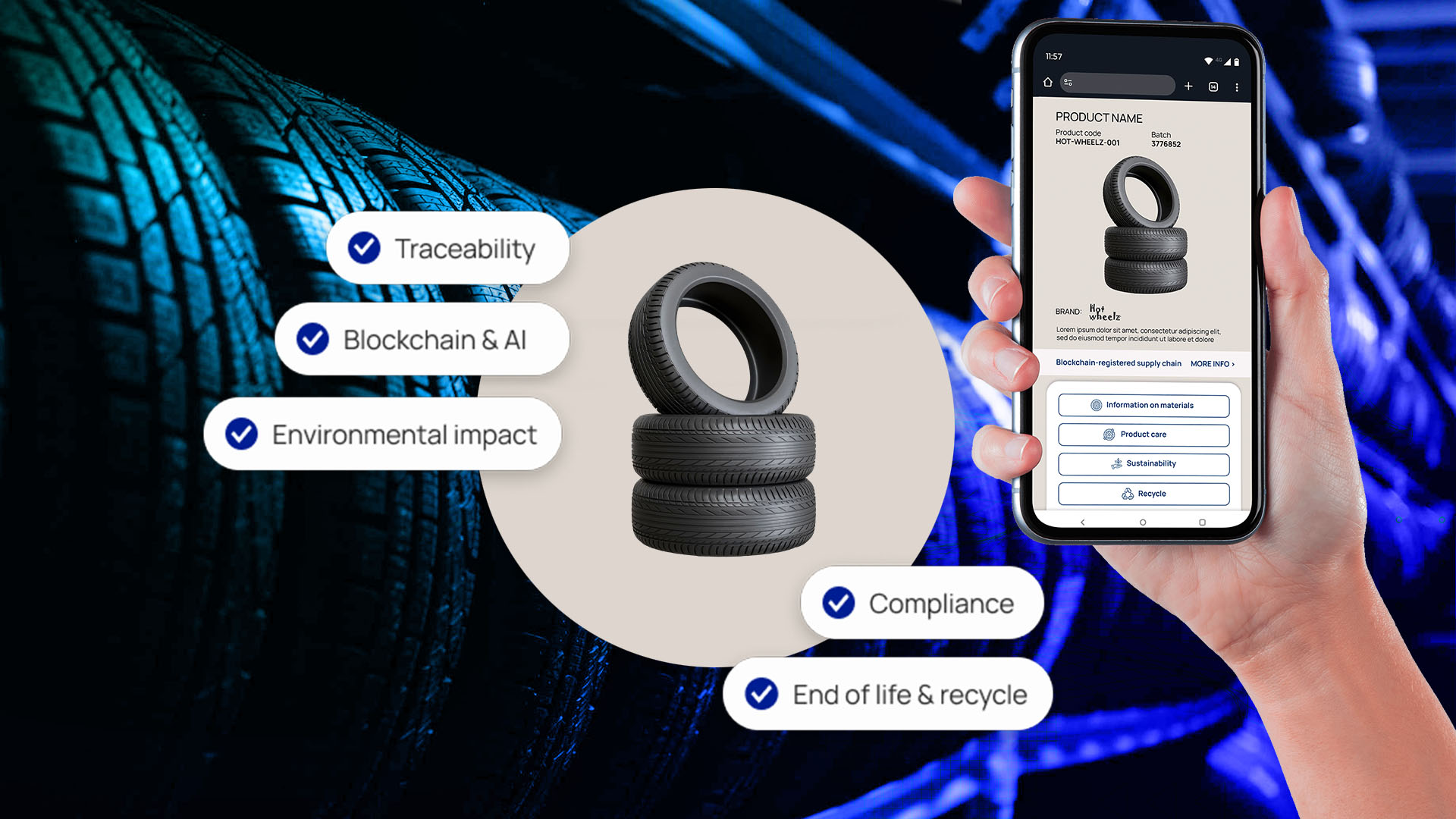
The Digital Product Passport for tires is mandatory, and the delegated acts are expected to be published soon. This will not be a simple compliance requirement. Every tire sold in Europe will be associated with a digital identity capable of communicating materials, performance, environmental impact, compliance, and end of life management. Reducing all of this to a “digital label” is a mistake. The Digital Product Passport is the product’s digital identity. For companies in the tire industry, this means something very concrete: organizing their data, which today is often distributed across different platforms and stored in non uniform formats, in order to standardize it and efficiently manage the creation of the Digital Product Passport.
Estimated reading time: 8 minutes
Key Takeaways
- The Digital Product Passport for tyres is mandatory, and the related delegated acts will require accurate management of information related to materials, performance and compliance.
- It is not just a digital label. It represents a structural transformation in the way companies manage product data within the tyre industry.
- Businesses need to start preparing now to avoid future operational challenges and comply with the ESPR Regulation requirements.
- DPP Studio by EZ Lab is the platform to create and manage the Digital Product Passport in a simple and compliant way, also available in white label for companies, consultants, agencies, software houses and system integrators.
- EZ Lab provides legal, operational and technical support throughout the entire Digital Product Passport creation process, if required.
Index
- What is the Digital Product Passport for tires
- Why the Digital Product Passport for tires is not just a label
- Managing and updating data over time
- Regulation and the European framework
- DPP Studio by EZ Lab for the Digital Product Passport for tires
- A solution also designed for agencies, software houses, and consultants delivering DPP in white label
- Support for creating Digital Product Passports
- Preparing for the Digital Product Passport for tires
- FAQ: DPP for Tires
What is the Digital Product Passport for tires
The Digital Product Passport is a structured system designed to collect, organize, and make accessible all relevant information connected to a tire throughout its lifecycle. It is not just about displaying data, but about making it searchable, updatable, and shareable among all involved stakeholders: manufacturers, suppliers, distributors, maintenance operators, and end of life management partners. In the tire industry, this means coordinating information related to material composition, technical performance, raw material origin, regulatory requirements, and recovery or recycling instructions. The connection between the physical product and its digital identity is enabled through QR codes or NFC tags, allowing access to the digital passport at any time.
Why the Digital Product Passport for tires is not just a label
The Digital Product Passport is often interpreted as a digital extension of the product label. In reality, the required transformation is much deeper. Companies in the tire industry already manage a large amount of data, but this information is usually distributed across different departments and built over time using different structures and processes. Technical data, material declarations, environmental assessments, and compliance documentation are not always aligned with each other. The DPP introduces a level of integration that was previously unnecessary. Information must become aligned, comparable, and verifiable. When these datasets are connected, inconsistencies become immediately visible. For this reason, the Digital Product Passport is not just an IT project, but a process that involves the entire organization.
Managing and updating data over time
One of the key aspects of the Digital Product Passport for tires is its dynamic nature. A tire may undergo maintenance, retreading, reuse, or enter recovery and recycling processes. Each of these stages may require updates to the information associated with the product. This creates the need for clear data governance rules: who can modify the data, who is responsible for validation, and how contributions from external stakeholders such as workshops or supply chain partners are managed. Managing the Digital Product Passport therefore becomes a governance issue involving multiple business functions, including compliance, operations, supply chain, and legal teams.
Regulation and the European framework
The Digital Product Passport is part of the ESPR Regulation (Ecodesign for Sustainable Products Regulation), which introduces new requirements for product transparency and traceability within the European market. Starting from 2026, the DPP registry infrastructure is expected to become operational, while delegated acts will define in detail the information required for each product category. Tire manufacturers will also be involved in this process, in line with European objectives related to circular economy, environmental impact reduction, and end of life management. Preparing in advance allows companies to avoid operational challenges and address the transition with a structured approach.
DPP Studio by EZ Lab for the Digital Product Passport for tires
DPP Studio by EZ Lab is the platform designed to create, manage, and distribute the Digital Product Passport in a simple, fast, and compliant way, also available in white label mode. The platform enables companies to centralize all product and supply chain information within a single system, simplifying data collection, organization, and sharing. One of its key features is the ability to verify the compliance of Digital Product Passports in real time. The system analyzes the uploaded data and provides operational guidance to improve quality, consistency, and alignment with regulatory requirements. This approach allows companies not only to create a DPP, but also to manage it effectively over time, keeping information updated and reducing the risk of non compliance.
A solution also designed for agencies, software houses, and consultants delivering DPP in white label
DPP Studio is designed not only for companies, but also to support all professionals involved in their clients’ digital and regulatory transformation. Agencies, software houses, system integrators, and consultants can use the platform in white label mode to offer Digital Product Passport services to their own clients, with the possibility to request legal, operational, and technical support from our experts whenever needed.
Support for creating Digital Product Passports
In addition to the platform, EZ Lab provides legal, technical, and operational support for the creation of Digital Product Passports. The service supports companies through every stage of the process, from data collection and structuring to compliance verification. This approach reduces project complexity and accelerates implementation timelines, while ensuring alignment with regulatory requirements.
Preparing for the Digital Product Passport for tires
The Digital Product Passport for tires represents a structural transformation in the way product information is managed. Companies that start working on it now can build stronger processes, improve data quality, and be fully prepared once the system becomes fully operational. Addressing the DPP for tires in advance means maintaining control instead of rushing to adapt later.
FAQ: DPP for Tires
The Digital Product Passport for tires is the product’s digital identity. It allows companies to collect, structure and make accessible information related to materials, performance, environmental impact, regulatory compliance and end of life management, connecting the physical tire to verifiable and continuously updatable data.
The Digital Product Passport for tires includes data related to material composition, supply chain information, technical performance, environmental data, compliance documentation, and maintenance, retreading and recycling instructions. The main challenge is integrating data from different sources while ensuring consistency, quality and continuous updates.
The Digital Product Passport is part of the ESPR Regulation and will progressively become mandatory for several product categories within the European market. The tire industry is also included, with specific requirements that will be defined through delegated acts.
No. The QR code or NFC tag is only the access point. The Digital Product Passport is a complete system that includes structured data, a software platform and continuous update processes. To function correctly, it requires automated integration of data from multiple sources, avoiding manual management.
Yes. DPP Studio is also available in white label mode and allows companies, agencies, software houses, system integrators and consultants to offer the Digital Product Passport to their clients through a ready to use platform designed for regulatory compliance.
Yes. EZ Lab provides legal, operational and technical support throughout the entire Digital Product Passport creation process, if required.
DPP Studio by EZ Lab integrates a real time compliance check that analyses the information included in the Digital Product Passport and provides suggestions to improve compliance and keep data updated.